Shada: The Model Work That Never Was
A deep dive into the model work in Shada, the unfinished 1979 Doctor Who Serial.

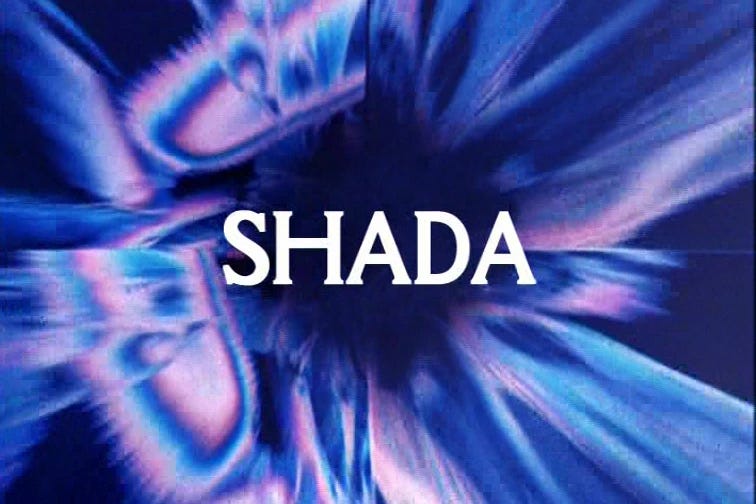
This blog focuses on the model work planned for the unfinished 1979 Doctor Who serial Shada. Crucially, most of these model sequences were never filmed or recorded in any form, surviving only in scripts, design drawings, production paperwork and behind-the-scenes photographs. What follows is an attempt to visualise what might have been achieved had the serial been completed.
Most readers here will already know the story and its production history, so rather than revisiting familiar ground I want to concentrate specifically on how the visual effects might have looked in 1979.
I have a huge amount of respect and affection for the 2017 reconstruction of Shada, particularly the stunning new model sequences produced by Mike Tucker and the Model Unit. They demonstrated just how visually ambitious Shada could have been. Mike himself has noted that these sequences likely surpass what the original production would have delivered, despite the conscious effort to remain authentic to 1979 techniques. Many of the other effects sequences in the reconstruction, however, were represented through traditional 2D animation.
This blog takes a different and hopefully complementary approach, using rare model photographs, production documentation and AI assisted visualisation to explore how all the scripted model sequences in Shada might have appeared if realised as physical effects work in 1979.
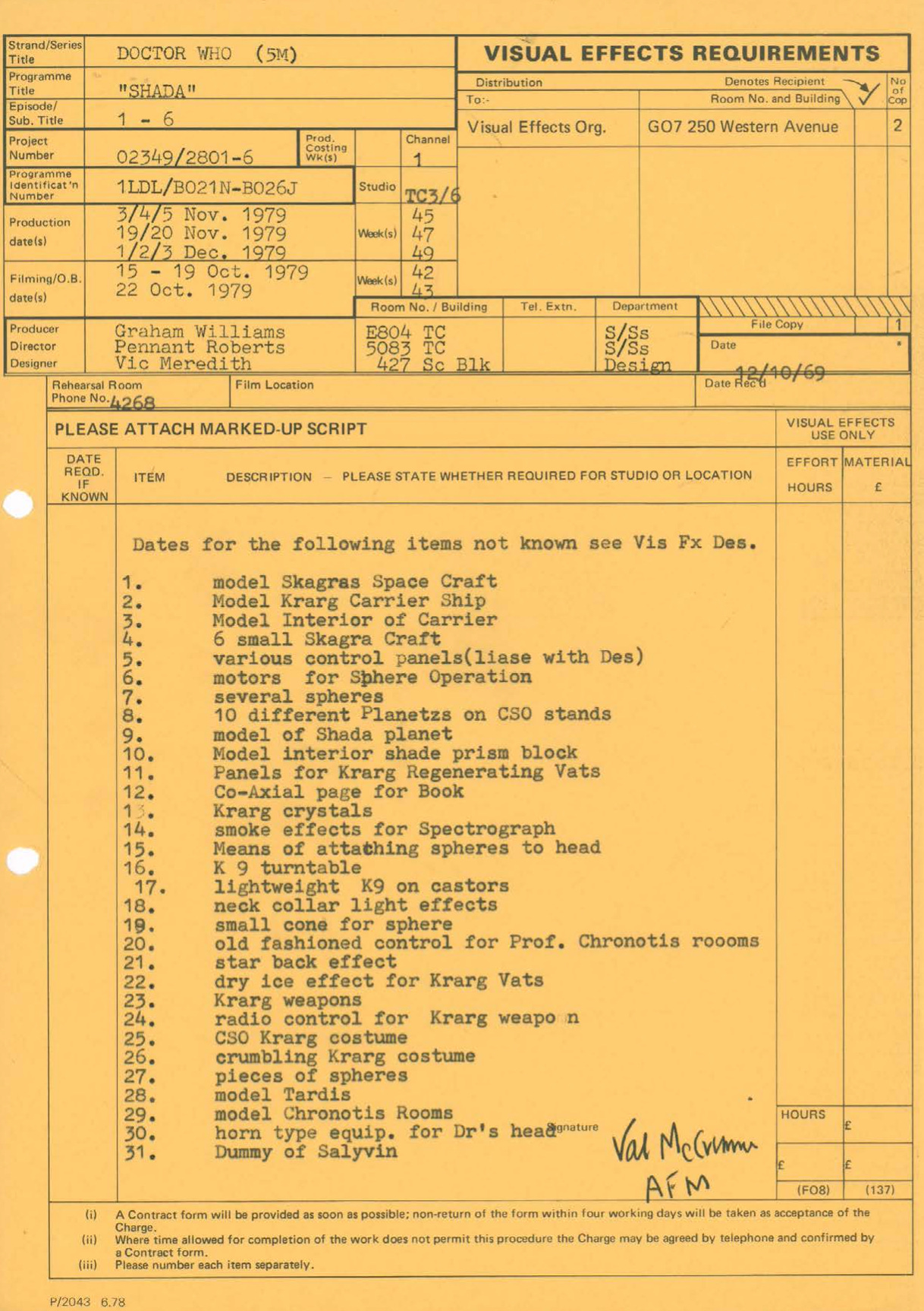
What was shot back in 1979?
A day of effects filming took place at Ealing Film Studios on Saturday 20 October 1979, but this was largely dedicated to CSO sequences featuring characters ascending and descending a ramp into Skagra’s invisible spaceship. The only model work filmed at Ealing was a Part Five sequence showing the Think Tank space station exploding.
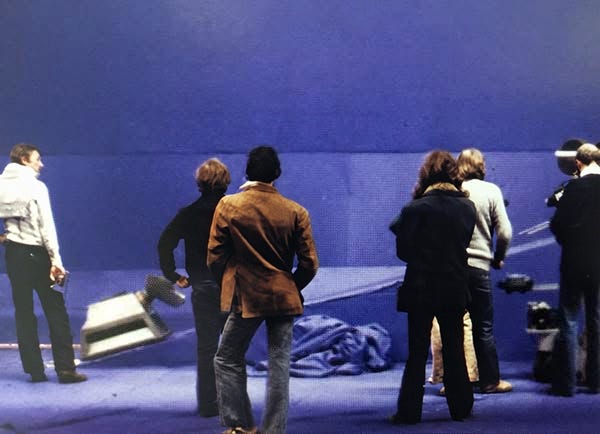
Shooting model sequences on 16mm film was generally preferred by the visual effects department because it allowed far more time and control over each individual shot. Film made it possible to light miniatures carefully and adjust exposure which helped sell scale and realism. It also captured finer detail and handled contrast better than studio videotape, which could flatten lighting and make models appear less convincing under the harsh conditions of multi camera recording. For these reasons, the Season 17 stories Destiny of the Daleks, City of Death and Nightmare of Eden all included high quality model work shot on film.
By the time Shada entered production, however, tightening budgets meant that most of the planned model sequences were intended to be recorded on videotape in the studio rather than filmed. This was quicker and cheaper but offered far less flexibility in lighting and camera setup. The same compromise had already been made on Nightmare of Eden and The Horns of Nimon earlier in Season 17.
Most of the model sequences were originally scheduled for 5 November 1979 as part of the first of three studio recording sessions for Shada. Following delays in the studio, however, most of these effects scenes were never recorded. Only a shot of Skagra’s ship leaving the field, along with material featuring Chronotis’ study and the TARDIS in the vortex, was completed. The remaining model work was deferred to the third studio recording session.
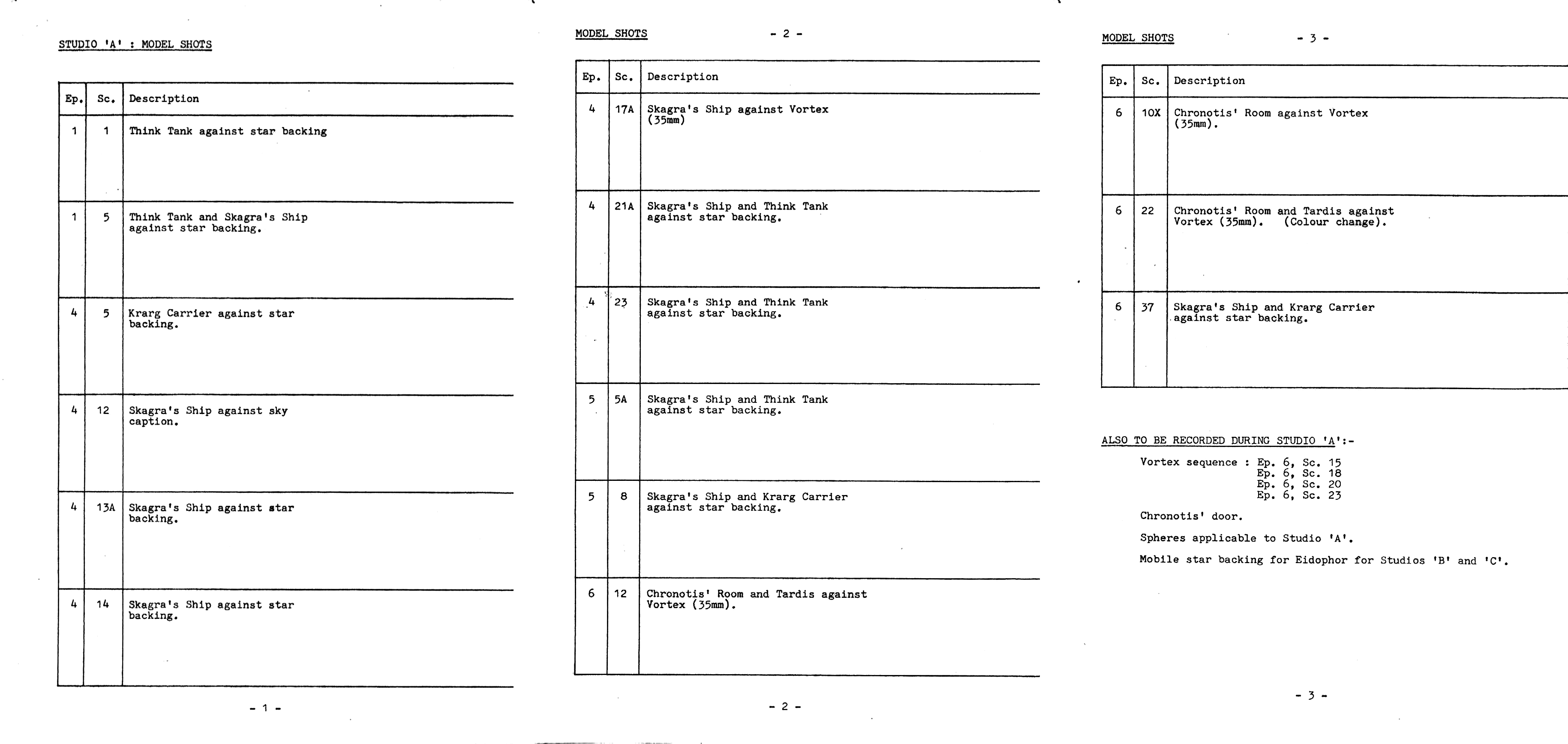
The second studio session was halted by a long running technicians’ dispute at the BBC. The strike had ended by the time rehearsals began for the third recording session, but the studio time was ultimately reassigned to higher priority Christmas programming, leaving Shada incomplete.
It is frustrating to think how close we came to a full set of model shots for Shada. Studio tapes from the single recording session show the models set up and ready for recording, and a small number of photographs were taken. Together, these provide a tantalising glimpse of what might have been and make it possible to recreate these sequences today using modern technology, while remaining as faithful as possible to how the model work would have appeared using late 1970s techniques.
SHADA: PART ONE
MODEL SHOT ONE
1. Ext. Think Tank Station in space
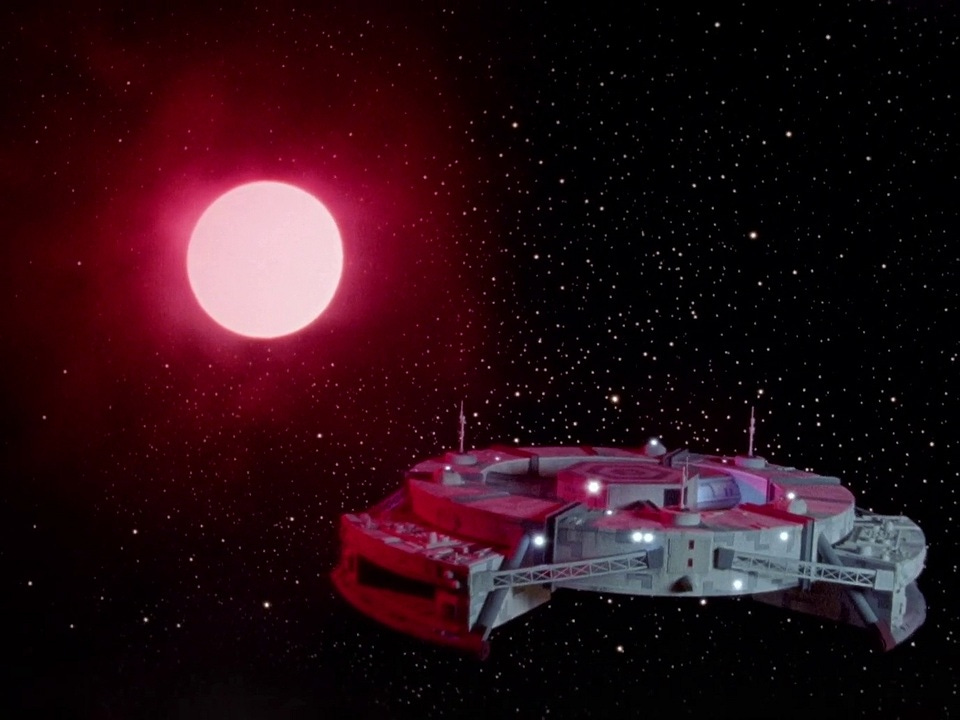
Establish Think Tank space station in space. It is a purely scientific foundation, therefore utilitarian. In the background is a star, the size of the sun only red. This is in a totally different galaxy, to our own.
The set designer for Shada was Victor Meredith, an accomplished technical illustrator who had been working on Blake’s 7. Unusually, he produced the initial designs for the miniatures as well as the studio sets, as visual effects designer Dave Havard joined the production at a late stage. This helped ensure a strong visual relationship between the interior sets and the models.
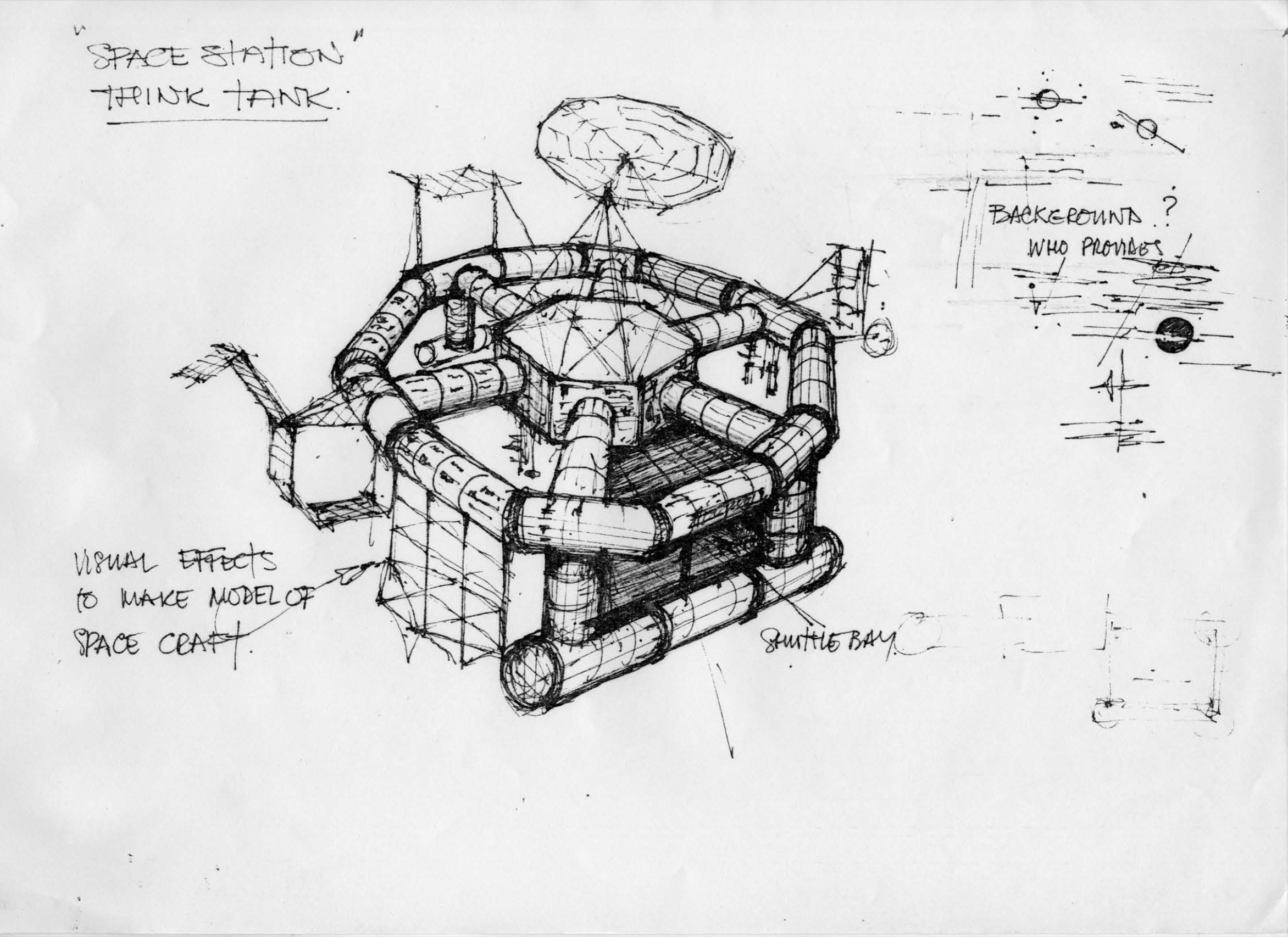
Dave Havard later produced his own design drawing for the Think Tank to ensure the model would be practical to build and shoot. The model was made by visual effects assistant Roger Turner using sections of plasti-card (sheets and strips of polystyrene plastic), built over a wood and metal frame.
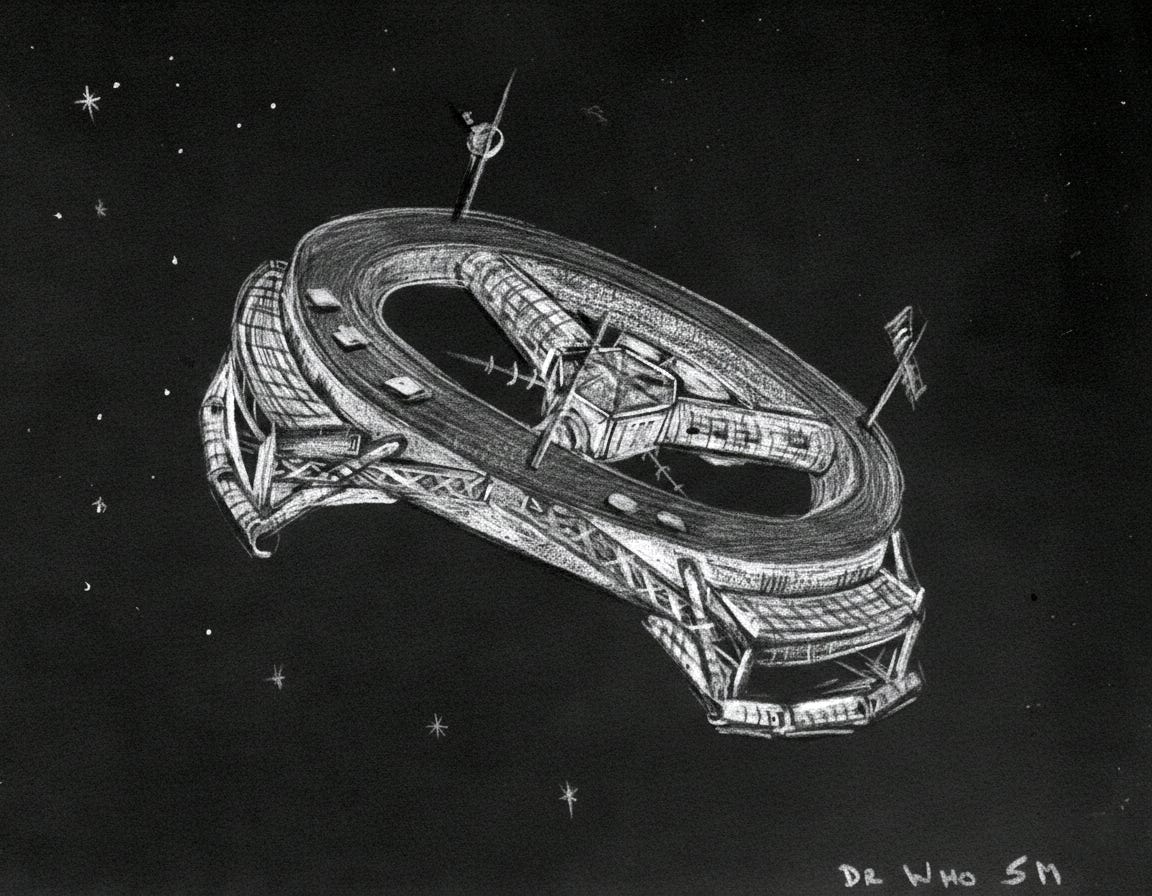
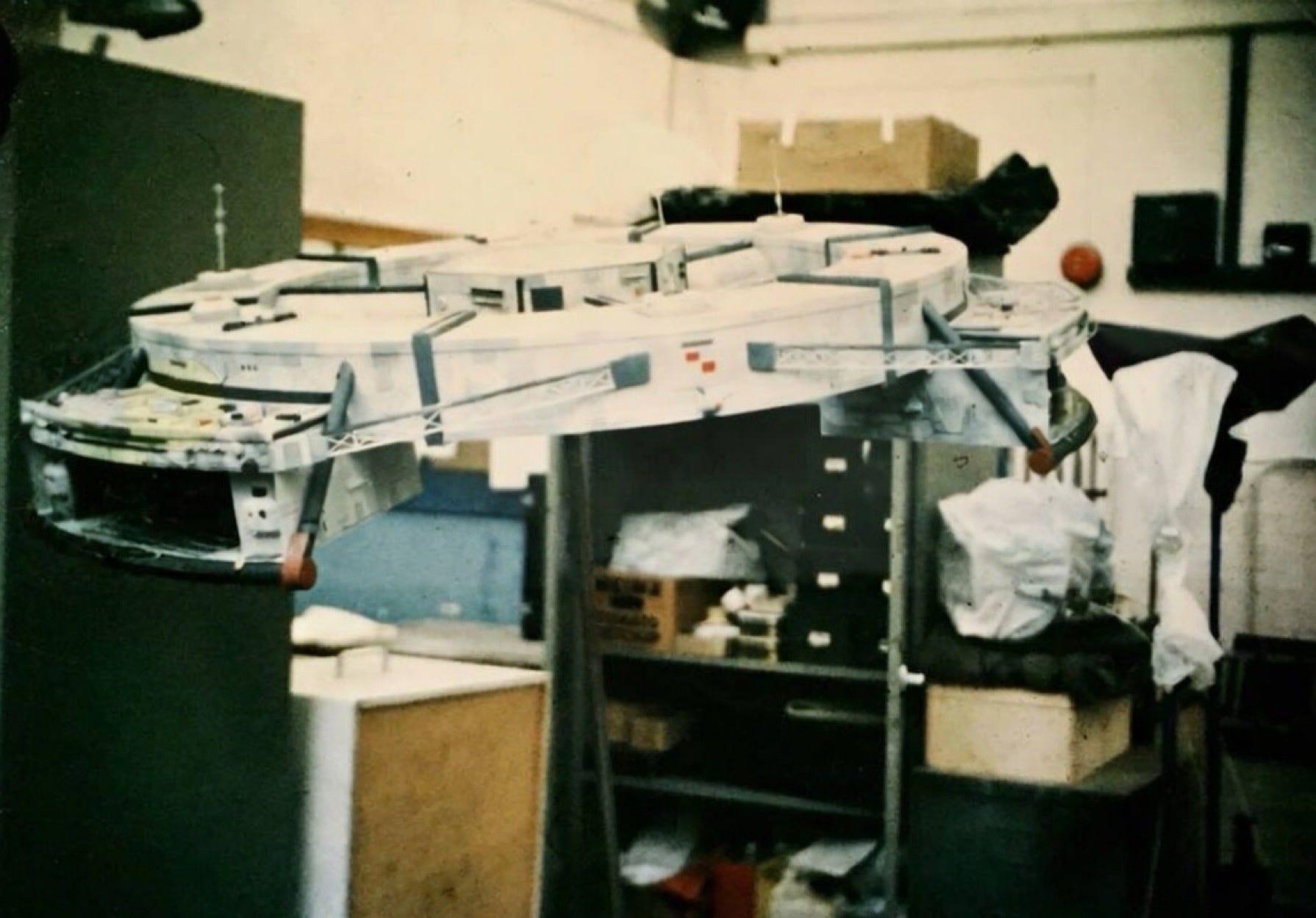
An establishing shot of the Think Tank space station was intended to open Part One of Shada. It was scheduled to be recorded on Monday 5 November 1979, the third day of the first recording session, but time ran out in studio. This is how the opening shot of Part One might have looked:
An alternative establishing shot of the Think Tank station.
For the 2017 reconstruction, the Think Tank model was recreated by Mike Tucker and the Model Unit, closely following Dave Havard’s original design. Care was taken to match the appearance of the original miniature, including identifying and sourcing the individual kit parts used by the effects team in 1979.
MODEL SHOT TWO
5. Ext. Space Station.
Shuttle bay opens, and a sleek spaceship slides out. It moves slowly away from the station. We stay with it as it begins to pick up speed, leaving the space station in the distance. Then, suddenly it puts on a fantastic spurt of speed which distorts our image of it as it shoots away from camera and vanishes into the far distance.
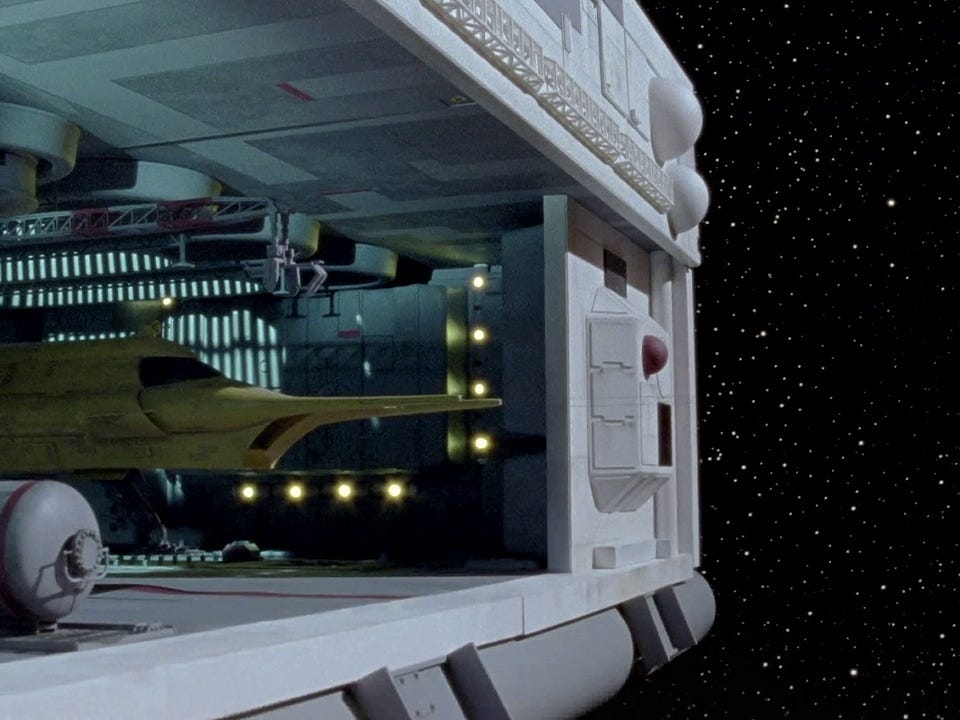
The second model sequence in Part One featured Skagra’s shuttlecraft departing from the Think Tank complex. It was scheduled for recording on 5 November 1979, but was not shot. The script called for a close-up of Skagra’s ship leaving the shuttle bay, followed by a cut to a wider shot of the craft in flight. In the days leading up to recording, however, the sequence was simplified. In the shooting schedule it appeared as a single shot described as ‘Think Tank and Skagra’s Ship against star backing’.
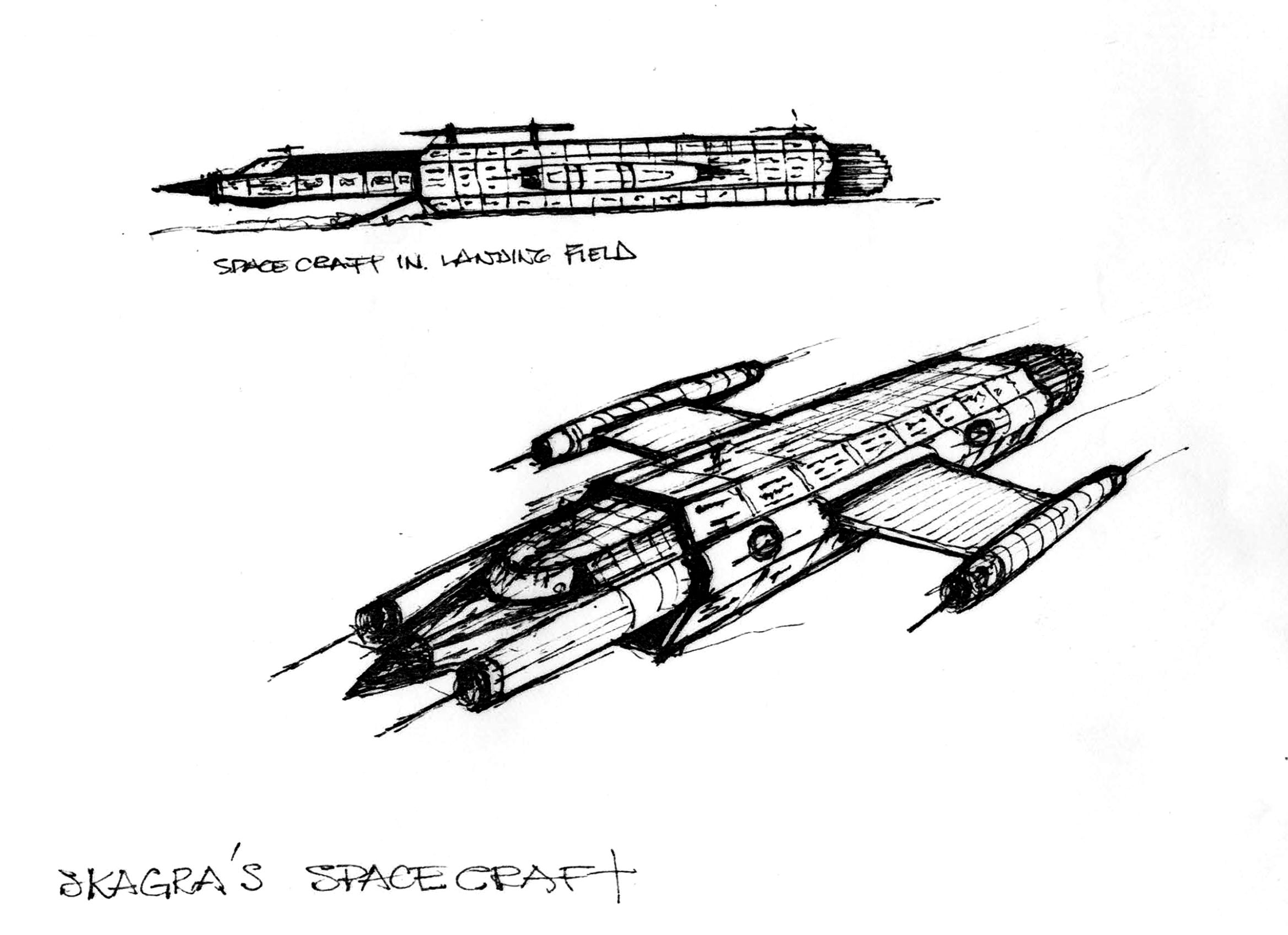
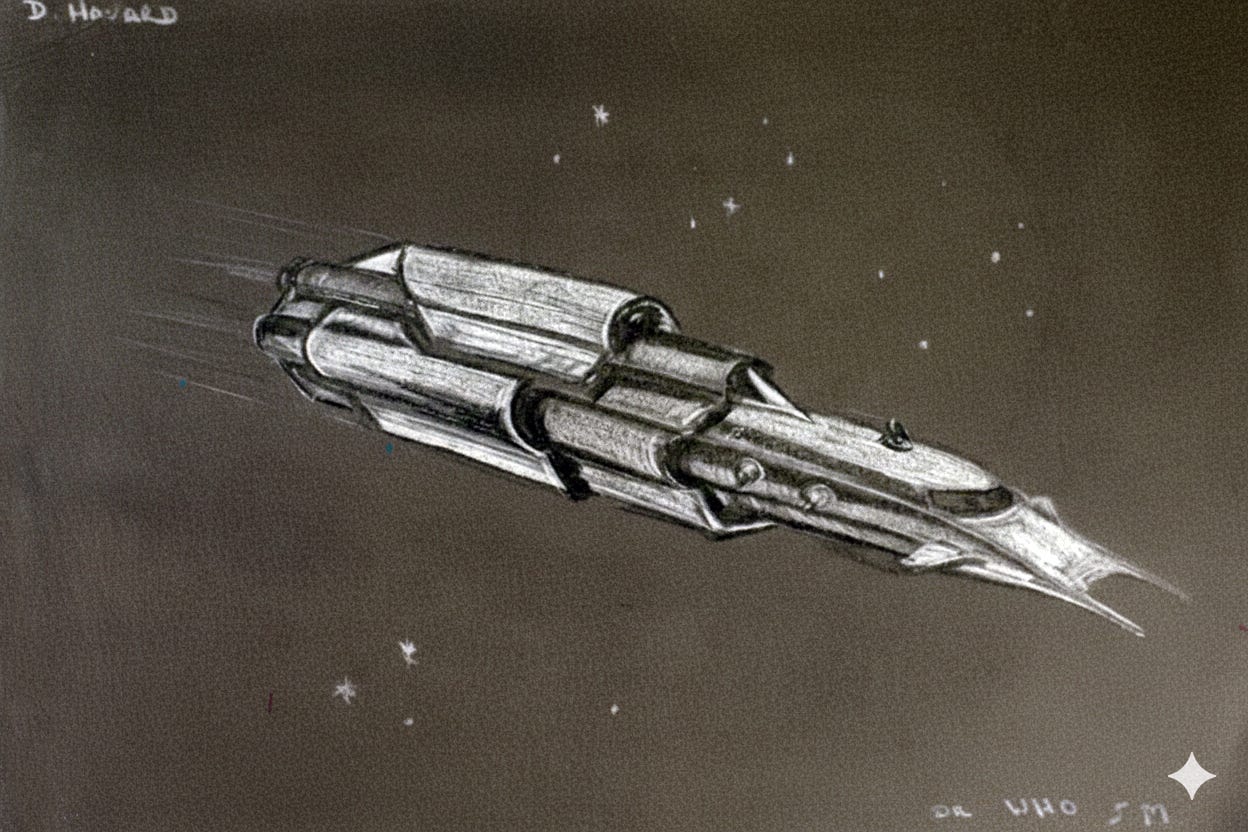
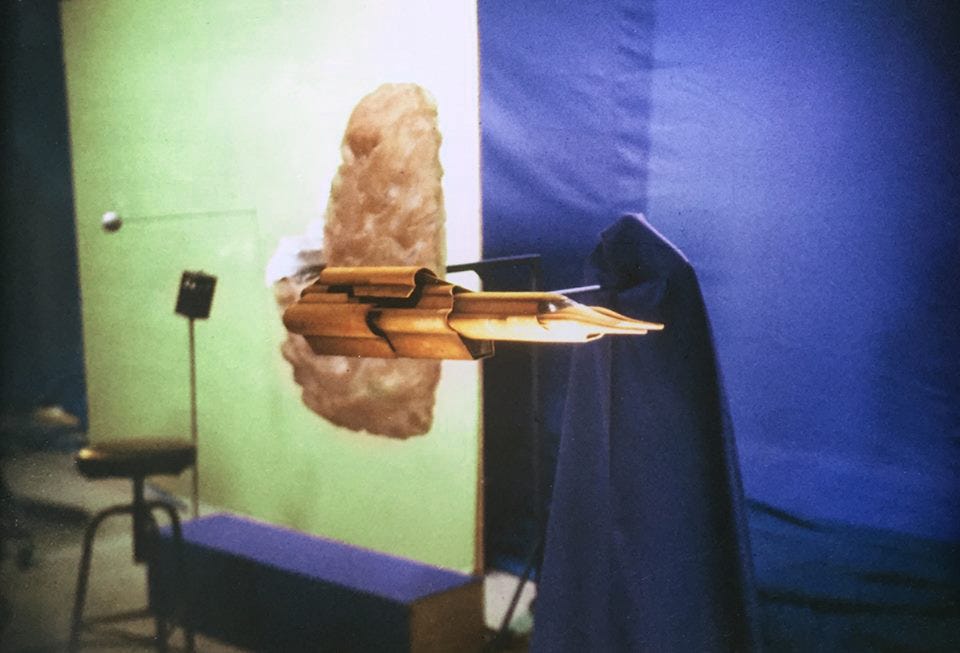
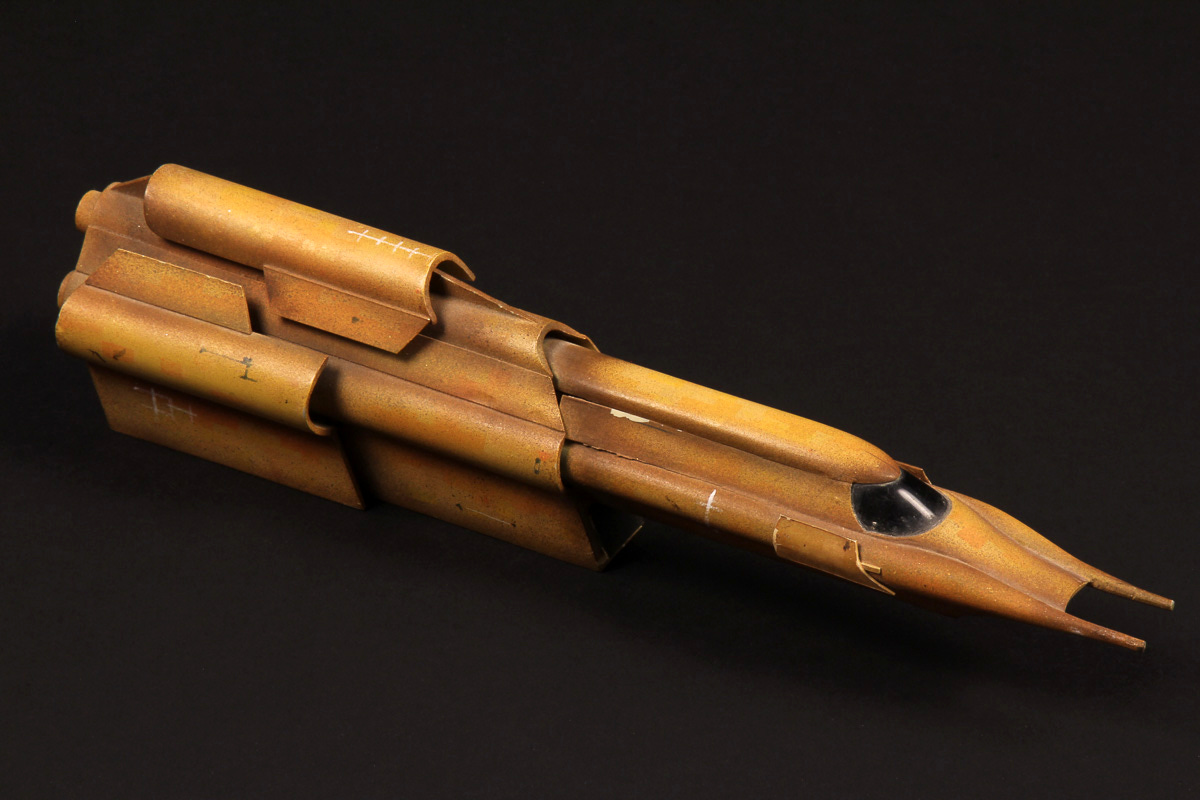
The two and a half foot ‘hero’ model of Skagra’s shuttlecraft was built by visual effects assistant Stuart Brisdon. In total, three versions of the spacecraft were constructed in different scales, with the largest serving as the principal filming miniature. Measuring approximately 30 inches in length, the ‘hero’ model was used for close-up shots.
The hero model was built from carved wood and plasti-card over a solid framework, with sections of ribbed tubular plastic forming the main body to echo the curved design of the studio sets. Additional surface detail was added using components taken from commercial plastic construction kits. The cockpit featured a Perspex canopy, and the finished model was given a weathered yellow paint treatment. A removable side panel concealed rigging pins for blue-screen photography, and three incandescent bulbs were installed at the rear to simulate engine thrust.
Smaller scale versions of the shuttle were also produced for use alongside other models. One of these smaller scale models would have been used for the shot of Skagra’s ship departing the Think Tank space station. This is how it might have looked:
For the 2017 reconstruction, Mike Tucker filmed the shuttle bay sequence, using construction methods consistent with those available in 1979. He also built a new version of Skagra’s ship to match the original filming miniature as closely as possible. The model was made from EMA tubing and plasti-card sheet, with additional surface detail created from a range of kit parts. Unlike the 1979 miniature, however, the new version used LEDs for illumination in place of the original incandescent bulbs.
Douglas Adams’ early draft of the script included sequences featuring a gun turret mounted on Skagra’s spacecraft. Victor Meredith produced detailed design drawings for both the studio set and a model version of the turret. The script described the gun turret as follows:
GUN TURRET
A small completely utilitarian space lacking any of the comforts we saw in the main control room. The only feature to denote the room’s function is a pair of space cannons on pivot arms, which allow them to be swung out of the ship’s hull and manoeuvred for firing. We use the one set to produce many angled shots, giving the illusion of many gun turrets.
OUTSIDE OF HULL
CSO of moving stars as it passes through space. Gun to show evidence of firing.
The gun turret was dropped at an early stage of pre-production as it would have been too costly to realise and was not considered essential to the plot. Victor Meredith’s design drawings provide a clear indication of how both the set and the model might have appeared on screen.
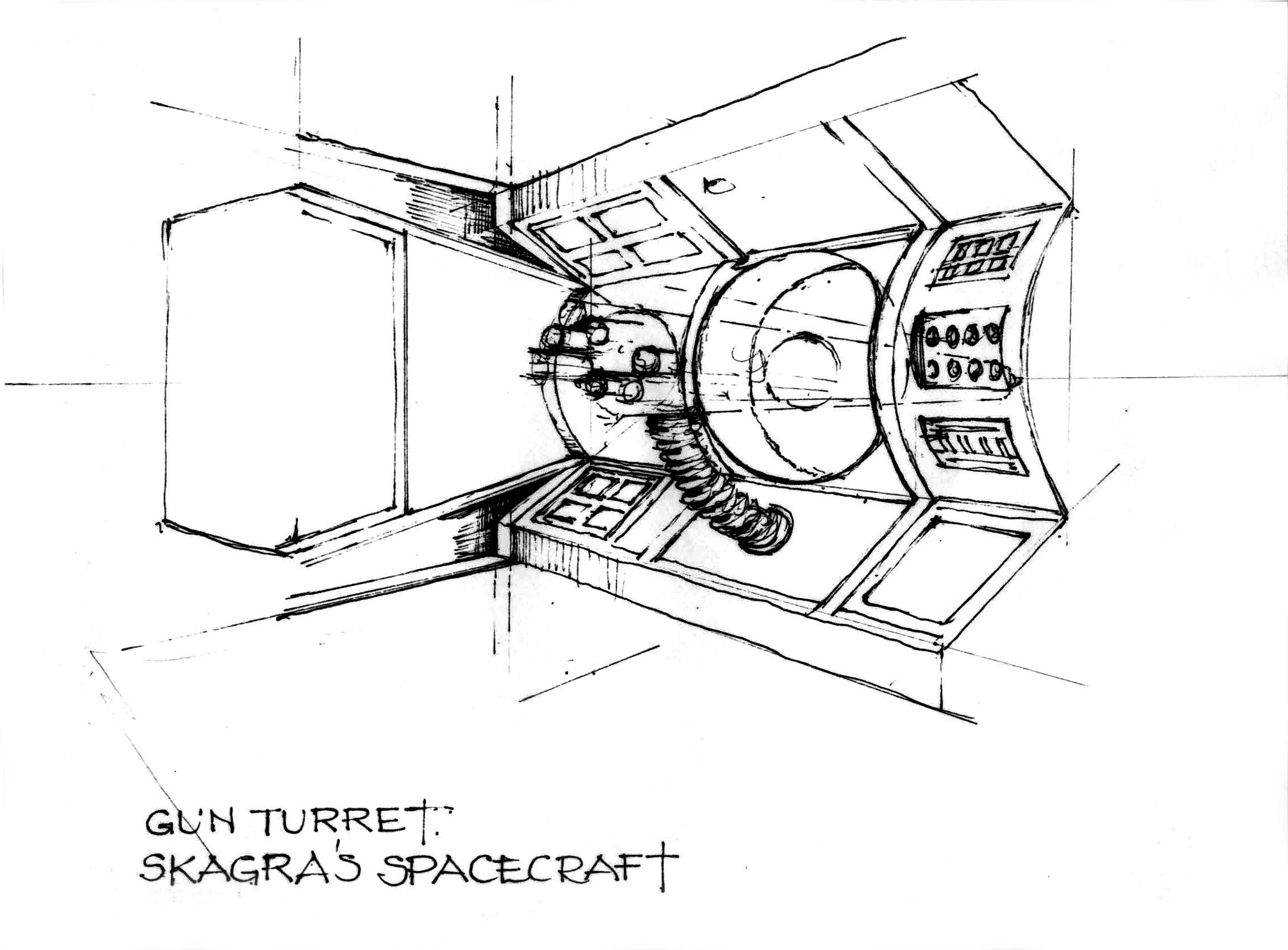
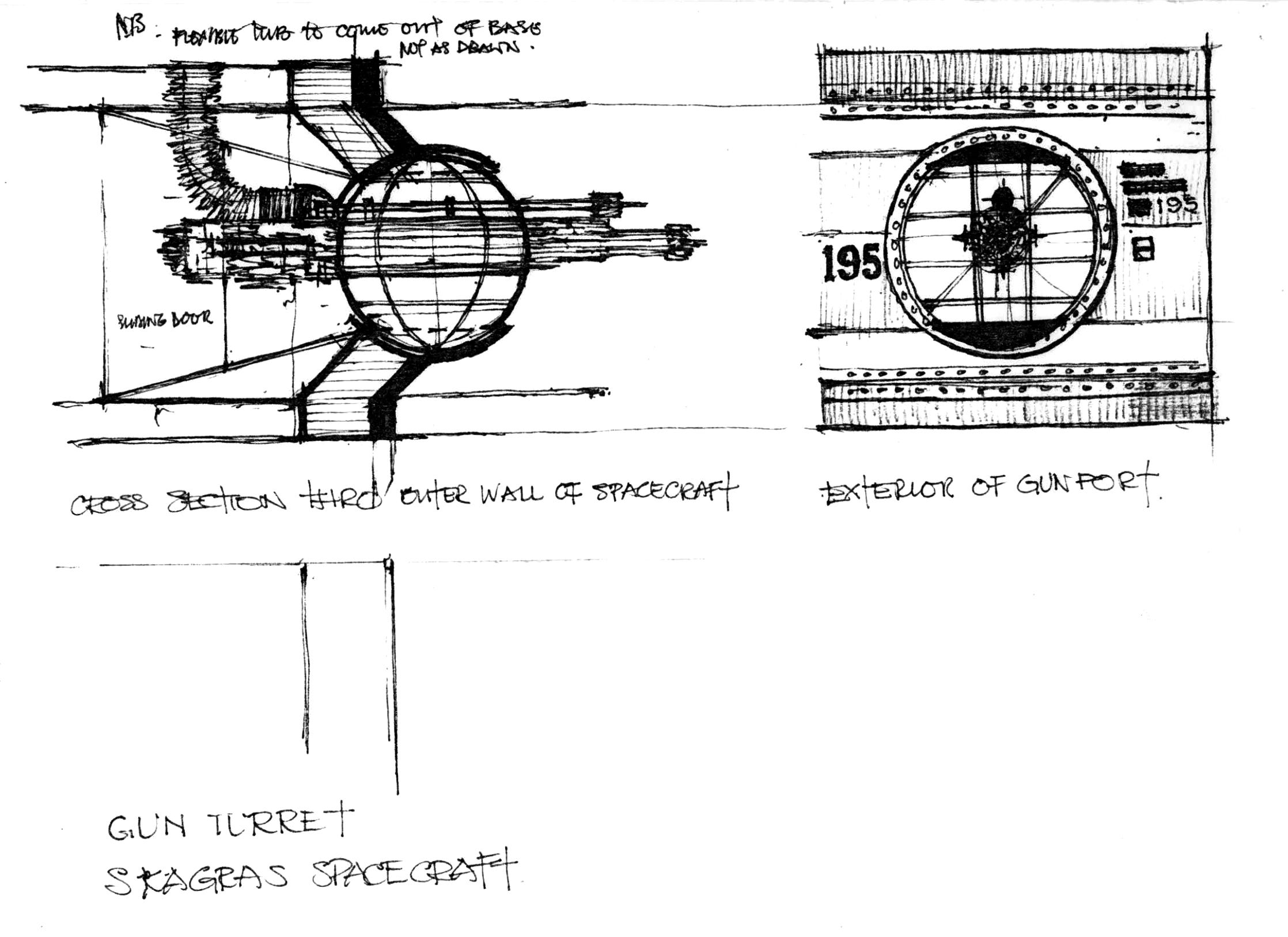
This is how the Gun Turret might have appeared on screen:
SHADA: PART THREE
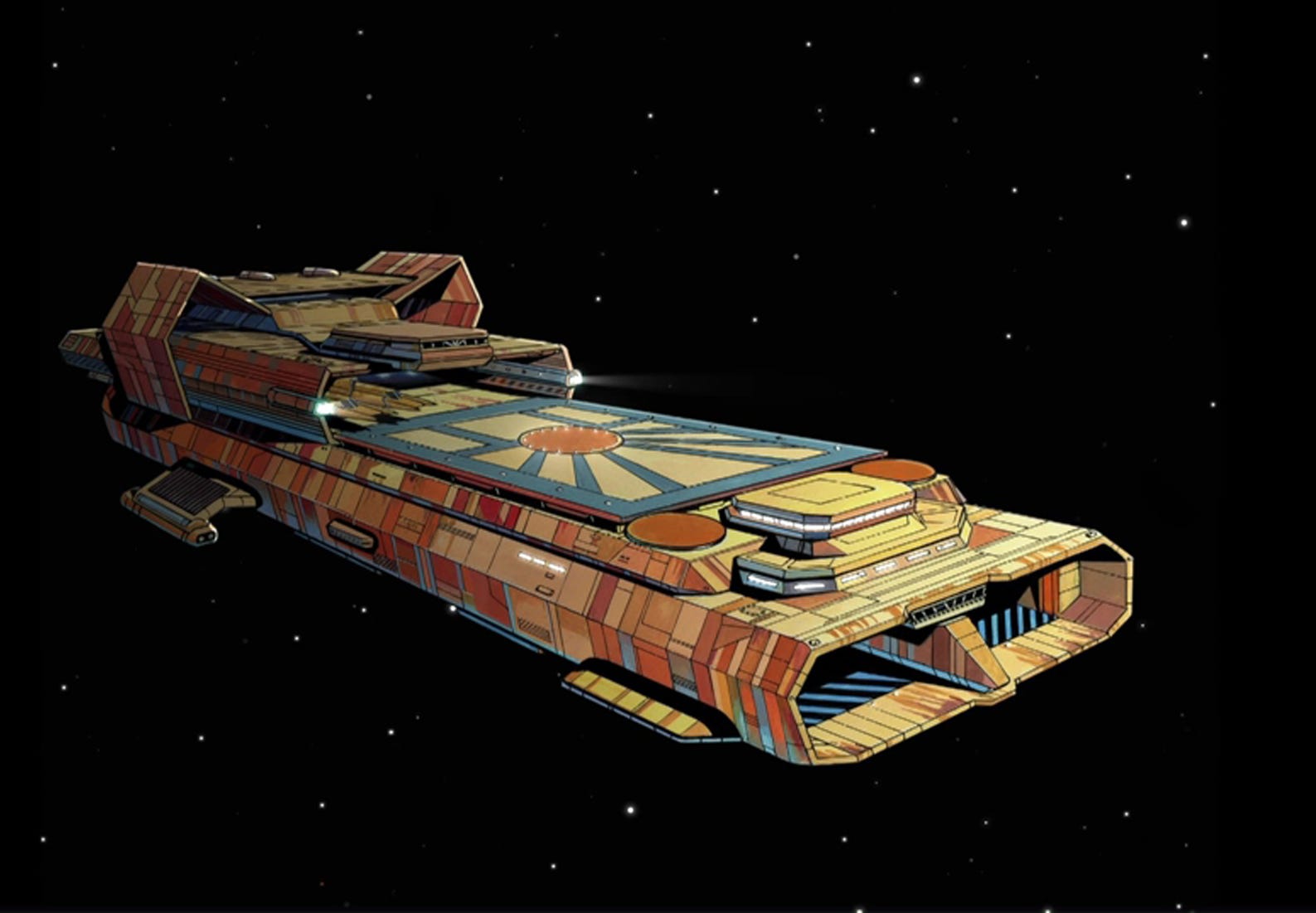
5. MODEL: CARRIER SHIP
Against a star background we see Skagra’s Carrier Ship. It is, in relation to the ship he has used so far, about the same size as a battleship to the Admiral’s Launch.
Pre-production documents described the Carrier Ship as ‘the equivalent to an aircraft carrier’, with its scale calculated in relation to Skagra’s shuttlecraft, estimated at 300 metres in length.
Designed by Dave Havard and built by visual effects assistant Roger Turner, the Carrier Ship was a large, blunt nosed, wide-bodied model with short wings. It was constructed to accommodate several smaller scale shuttlecraft within its structure. The model was later sold at auction during the Longleat 20th anniversary event in 1983.
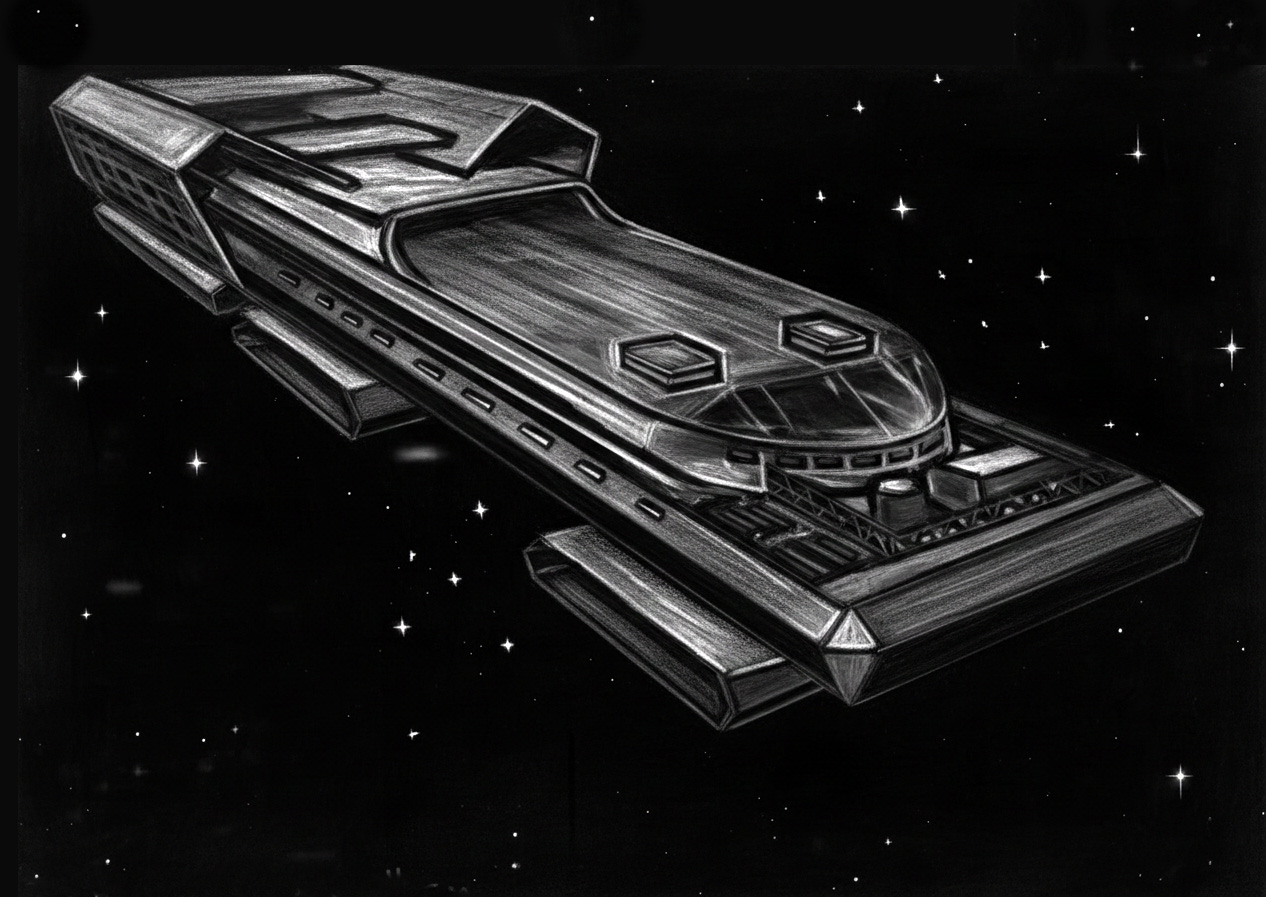
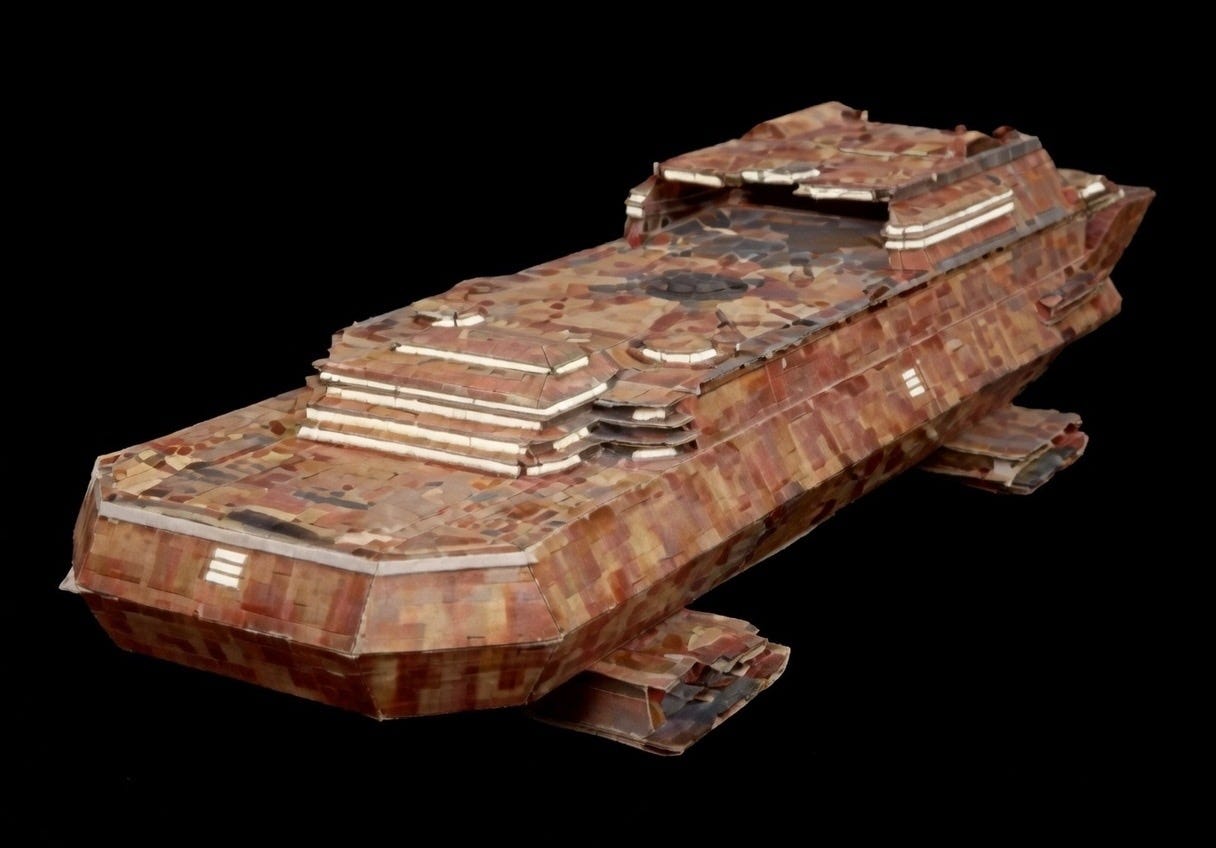
How the establishing shot of the Carrier Ship might have looked on screen:
For the 2017 reconstruction, a detailed illustration by Graham Bleathman was used to depict the Carrier Ship.
SHADA: PART FOUR
Part Four was intended to include a wide range of shots featuring Skagra’s ship. All of these model sequences were scheduled to be recorded during the first studio session for Shada, but time ran out before they could be completed.
12. MODEL SHOT
Against a fast-streaming star background the ship takes visible shape.
The shot of Skagra’s ship becoming visible as it travelled through space would have been achieved using CSO. The model was due to be recorded against a blue screen backdrop in the studio, carefully lit to separate it cleanly from the background. The image would then have been keyed over a separately prepared star field. By fading up the keyed model over the fast-streaming stars, the effect would have suggested the ship phasing into visibility while already in motion.
13A. MODEL SHOT
The ship comes to a standstill against the star background.
For the scripted shot in which the ship comes to a standstill, the stationary model would have been recorded against a blue screen, then composited over a moving star field. The apparent deceleration would have been achieved by the camera panning slowly across the model and by reducing the movement of the star backing, allowing the ship to appear to settle into a stationary position against the drifting stars.
14. MODEL SHOT
With a grinding noise, not unlike that of the TARDIS in operation, the ship dematerialises.
The scripted shot in which Skagra’s ship dematerialises would have used the standard roll-back-and-mix technique commonly employed for TARDIS departures. The model would have been recorded against a star background, after which the tape would be rolled back and the image mixed out while the background remained, creating the effect of the ship fading from view.
17A. MODEL SHOT
Skagra’s ship moving slowly through the vortex.
The shot of Skagra’s ship travelling through the vortex would have included footage of the Doctor Who title sequence.
21A. MODEL SHOT
Skagra’s ship materialises in the vicinity of the Think Tank.
One of the smaller models of Skagra’s ship would have been used for the shot of the craft materialising near the Think Tank station. The two miniatures would have been shot separately against a blue CSO screen using different cameras, with the image of Skagra’s ship gradually faded in over the station to create the effect of it appearing in position.
23. MODEL SHOT.
Skagra’s ship docking with the space station.
SHADA: PART FIVE
TELECINE 1:
Model Shot
The space station explodes spectacularly.
High speed 35mm cameras were used to capture the destruction of the Think Tank complex, ensuring the explosion had weight and scale when played back at normal speed. Rather than sacrificing the principal filming miniature, two simpler breakaway models were constructed specifically for detonation. The sequence was shot at Ealing in several passes, including long and mid shots, to provide editorial flexibility and enhance the sense of scale.


Although this model sequence was filmed, I couldn’t resist having a go at recreating the explosion myself!
8. MODEL SHOT.
The Kraarg Carrier Ship, Skagra’s ship materialises.
ADDITIONAL MODEL SHOT: SHADA
Unusually, the scripts contained no description of Shada itself, the Time Lord prison world. As a result, Victor Meredith did not produce any design sketches for it during the initial stages of pre-production.
Dave Havard therefore had considerable freedom in developing the design. He conceived Shada as a cluster of Alcatraz style buildings arranged around a central docking bay; all embedded within an asteroid orbiting a distant star. The model was constructed by visual effects assistant Roger Turner and backlit in the studio to enhance its silhouette. It featured a prominent dome and tower set into resin, while the asteroid itself was formed from translucent fibreglass.
The model shots of Shada appear to have been introduced very late in the process, perhaps when it was realised that the audience needed a clear establishing view of the serial’s central location. It was listed on the shooting schedule as an ‘additional model shot’, with no corresponding scene number.
The model was set up in the studio for the first recording session, but overruns meant the planned sequences were never recorded. This is how the establishing shot of Shada might have looked:
SHADA: PART SIX
Although not scripted, it is likely that Part Six would have included a few establishing shots of Shada.
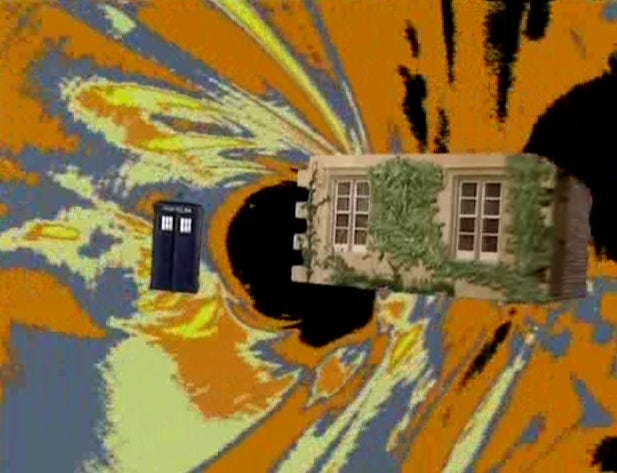
The shots of the TARDIS and Chronotis’ room travelling through the vortex were recorded in the studio on 5 November 1979 against a green CSO screen. The vortex effect itself was created using footage derived from the closing credits film, with the colours altered electronically through a colour synthesiser to produce a more otherworldly appearance.
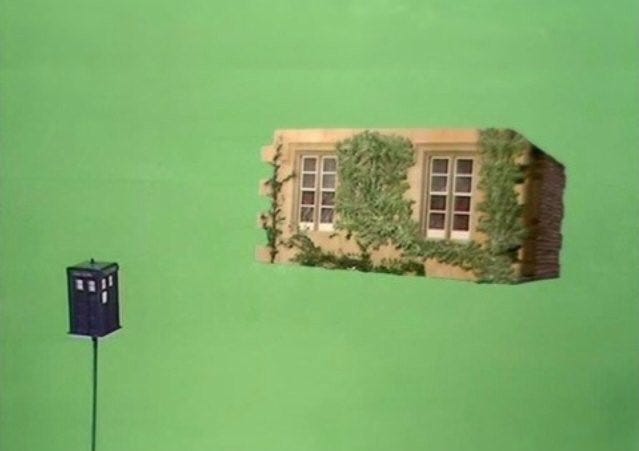
Planned shots of the Doctor crossing the vortex would have required Tom Baker to stand on a raised platform within the CSO area, filmed against the keyed background and shot through a rotating lens to create the distinctive swirling distortion. These sequences, however, were never recorded.
37. MODEL SHOT.
Skagra’s ship on the Carrier.
I hope you have enjoyed this exploration of the model work planned for Shada and the glimpses it offers of a serial that was sadly never fully realised. This blog is not intended to detract in any way from the remarkable 2017 reconstruction, but rather to fill in some of the remaining gaps and imagine what audiences might have seen had the original production reached completion in 1979. The skill, care and affection evident in that reconstruction elevated Shada to one of my all-time favourite stories, and this blog simply aims to build on that remarkable production, piecing together the available evidence to bring us a little closer to the version that might have reached the screen.
Amazing. Lovely stuff! 👏🏻
Fantastic stuff Jonathan! Ever since I saw the VHS back in 1992 I've been a Shada obsessive so this is manna to me. The 'what if' vids are really good. I'm curious where you found some of the photos from? I can see at least one from Steve Cambden's book, but I've never some of the other before. Great stuff.